Research

Job Market Paper
2025
-
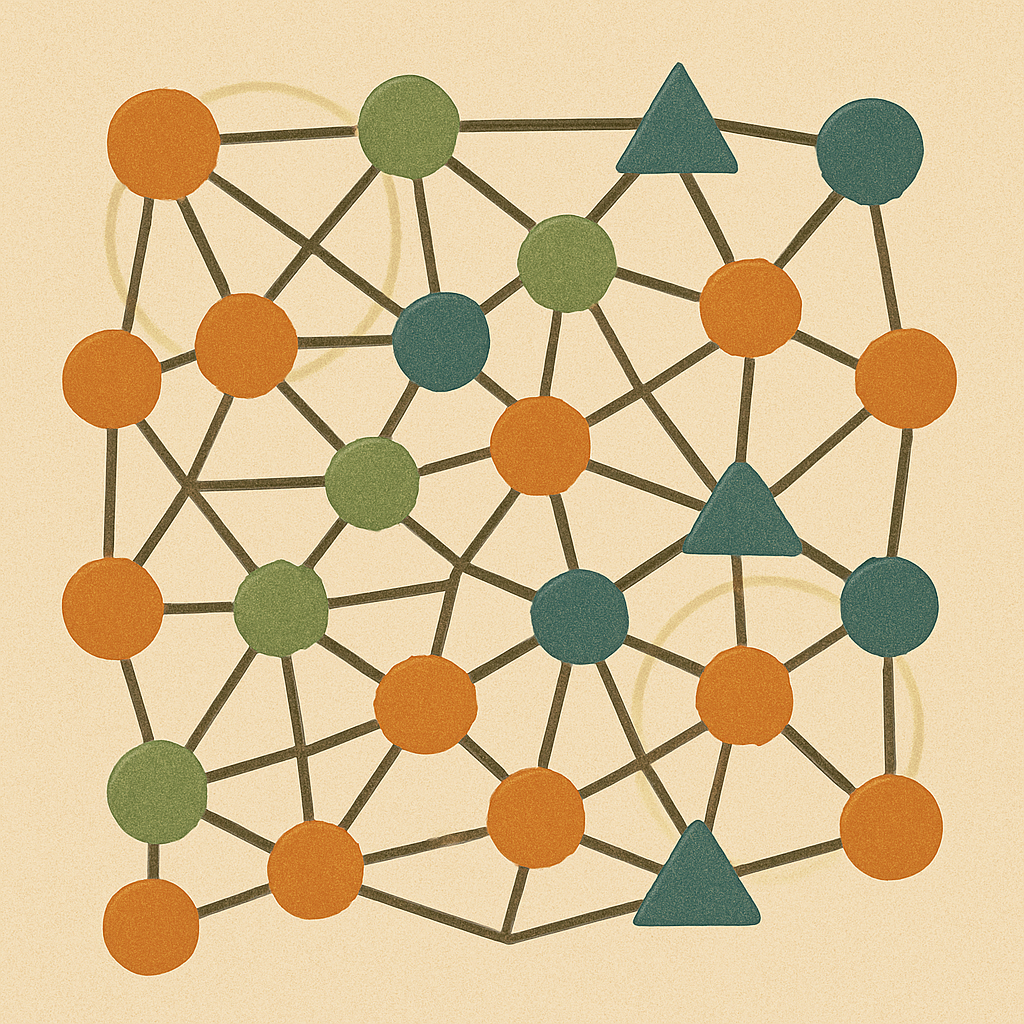 Birds of Many Feathers: Uncovering Joint Similarities and Organizational OutcomesFinalist for the OMT Divison Best Student Paper Award, AOM 2025
Abstract: Why do structurally identical organizations with comparable demographics develop vastly different collaboration patterns? I argue that the answer lies in intersectional homophily—the degree to which multiple identity dimensions jointly pattern informal networks at the organizational level. Unlike approaches examining similarity dimensions independently, this construct captures how identity combinations acquire collective meaning through organizational processes, creating distinct network signatures that shape collaboration, innovation, and conflict. I develop and validate a diagnostic test that detects when identity intersections, rather than single dimensions, drive network formation. Applying this test across three studies reveals systematic organizational variation invisible to traditional analysis. First, simulations validate the diagnostic’s ability to distinguish intersectional from independent homophily patterns. Second, analysis of a manufacturing facility shows that discretionary friendship networks exhibit twice the intersectional homophily of task-constrained networks, confirming that relational choice amplifies identity intersection effects. Third, examining 56 schools demonstrates consequential outcomes: organizations with higher intersectional homophily experience significantly more conflict, even after controlling for demographics and structure. These patterns emerge through three mechanisms: identity-based clustering creates distinct interpretive schemes, limited cross-group interaction prevents bridging relationships, and aligned boundaries reduce conflict resolution capacity. The framework reveals why seemingly similar organizations diverge—showing that effective collaboration depends not on who is present but on how their identities configure informal networks—and provides tools to diagnose and intervene before these patterns crystallize into organizational dysfunction.

Under Review Papers
2025
-
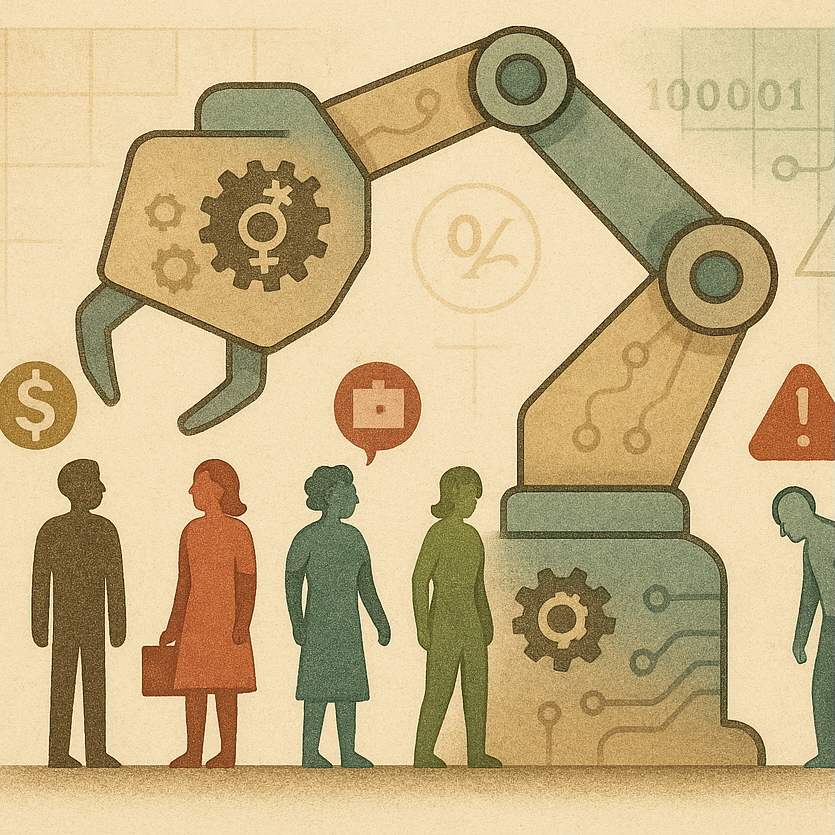 Demographically Biased Technological Change? Evidence from Automation’s Impact on Manufacturing EmploymentRevise and Resubmit at Organization Science
Finalist for Best Paper Award, EGOS 2024Abstract: Who gets the jobs that automation creates? A consensus has begun to emerge that said technologies create rather than remove jobs. However, they also shift the demand for specific types of skills and other worker competencies. Such shifts imply unequal demographic impacts, but beyond age, such impacts are largely unexplored. We build a unique dataset to examine the establishment-level employment impacts of automation capital stock by race and occupation. We find that automation reduces aggregate establishment employment, especially for frontline workers and managers. Furthermore, post-investment workers are substantially more likely to be white. These findings highlight how the uneven impact of automation across occupations with di!erent racial composition can result in demographically biased technological change.
-
 Nothing to Lose or Much to Lose? The Gendered Employment Consequences of Leaving Engineering MajorsRevise and Resubmit at Organization Science
Abstract: Can increasing women’s persistence in engineering reduce gender wage gaps? Despite the intense interest shown by scholars and policy makers alike in promoting women’s persistence in engineering careers, there is a lack of empirical research answering this question. Rather, the employment consequences of leaving engineering have largely been assumed. Using wage decomposition, this paper tests for gender differences in the post-graduation wages of engineering major stayers versus leavers. We do so for three distinct longitudinal datasets. Our results are significant, consistent, and challenge prior assumptions. The unexplained portion of the stayer-leaver wage gap for men engineers across all three datasets is large, significant, and substantive – from 22% to 35% of men engineers’ mean initial annual salary. Men experience a large wage penalty for beginning but not completing an engineering degree. The unexplained portion of the stayer-lever wage gap for women engineers is small, mostly insignificant, and far less substantial – from 0% to 5% of women engineers’ mean initial annual salary. In other words, women experience little to no wage penalty for beginning but not completing an engineering degree. These results have direct implications for the policy goals of using women’s participation and persistence in engineering to address gender wage inequality and provides novel insights regarding the mechanisms and nature of gender inequalities in engineering. Surprisingly, it is men who have much to lose by leaving engineering. The women who start engineering majors have little to lose financially at career launch by leaving.


Works in Progress
2025
-
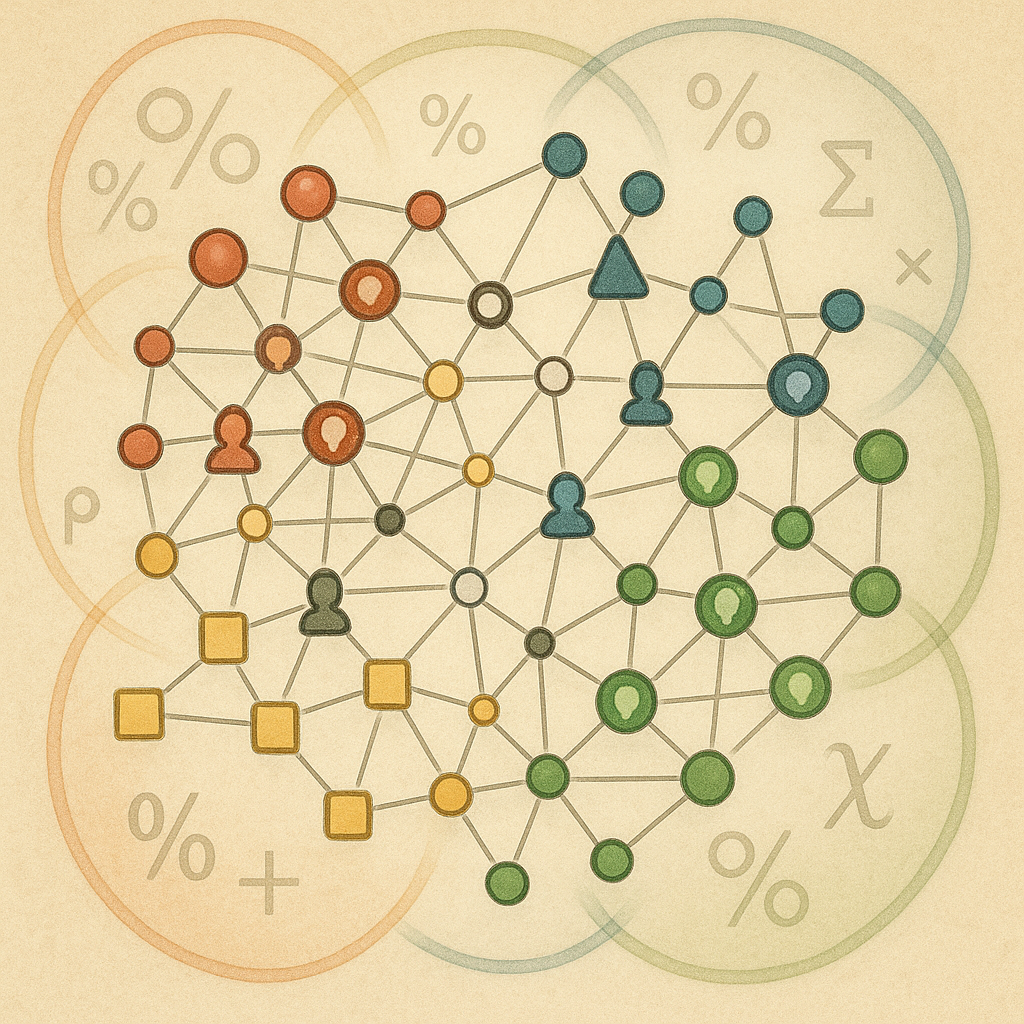 Intersectional Homophily: A New Measure of Multi-Dimensional Homophily in Social Network2021 Academy of Management Proceedings
Abstract: Homophily in social life has been an increasingly important focus of social network research. However, most studies only measure homophily one dimension at a time, reducing an individual’s identity to only one attribute. In reality, individuals belong to multiple social groups simultaneously. Knowing that homophily in one dimension usually spills over into homophily in a correlated dimension, recent scholarly works call for explicitly examining multiple dimensions simultaneously and also refining homophily measures to better match the theoretical intent. I use intersectionality as the theoretical foundation to bring socially constructed meaning among multiple social identities into homophily literature. I use a random data generator process to develop and test a new homophily measure that can simultaneously measure homophily on multiple dimensions such as race, gender, and age. The findings in this simulated setting provide evidence that intersectionality affects homophily because of intersecting identities; multiple identities interact in a complex way rather as opposed to being simple additives. In addition, I examine my newly developed measure on actual network datasets and the findings are consistent with those of the simulated scenarios. I conclude with a discussion of the implications of this measure and how this measure contributes to the deepening of our understanding of social interactions and the processes that create sociodemographic structures.
-
 Beyond Social Network Data: Critiques of a Dyadic Approach in Social Network Studies
Abstract: This study examines how informal networks form in real-time through an innovative process-oriented approach. Using longitudinal data from 60 first-year MBA students across four cohorts at McGill University, we investigate how individuals’ perceptions of similarity and interaction preferences evolve during the critical network formation period. Unlike traditional survey-based network research that captures static snapshots, this study tracks participants throughout their first months of interaction, revealing how initial assumptions about similarity give way to actual interpersonal knowledge. The research addresses fundamental limitations in network measurement approaches by examining whether respondents think in dyadic versus group-oriented terms when forming connections. Through systematic interview protocols across multiple cohorts, we capture the dynamic meaning-making processes that standard network surveys miss entirely. The findings reveal significant gaps between how people actually conceptualize collaborative relationships and how our measurement instruments assume they think about network choices. This research contributes new theoretical insights about homophily as a process rather than an outcome, while offering practical implications for improving network data collection methods in organizational research.

